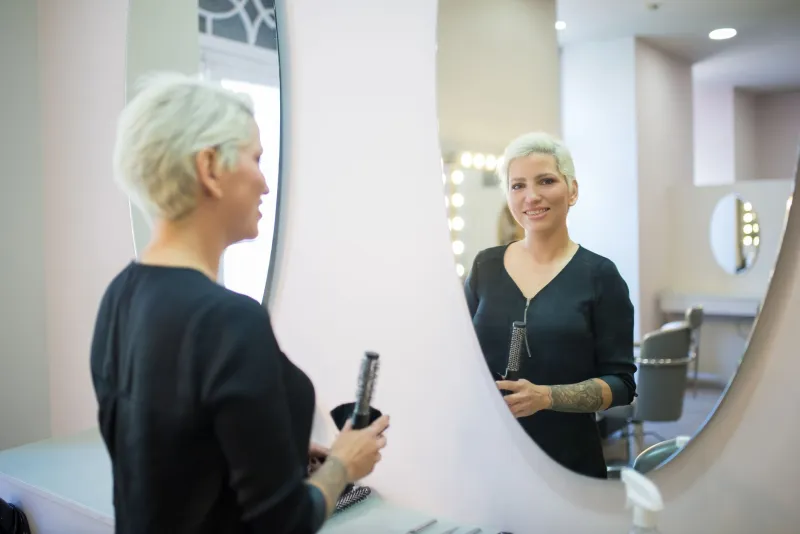
The Art of the Consultation: Why the Conversation Before Your Cut Matters More Than the Cut Itself
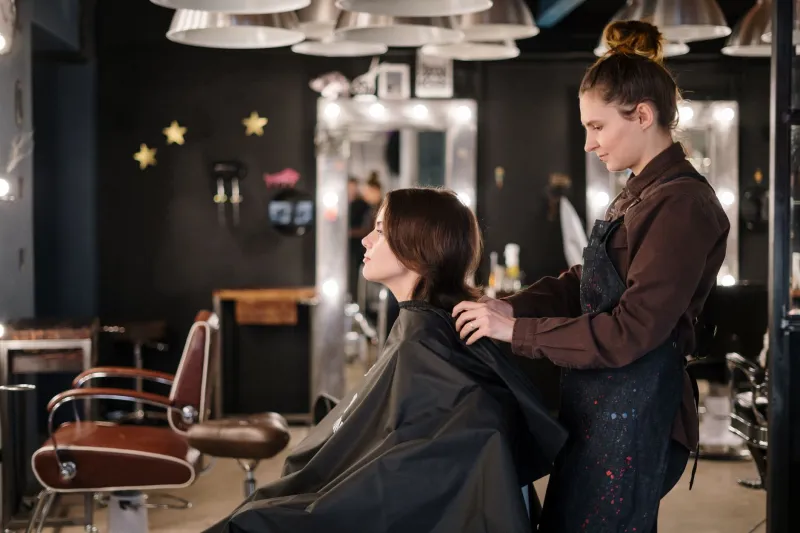
Walk into any salon in the country and you will likely encounter the same opening ritual: a client settles into the chair, pulls out a phone, and presents a photograph. "I want this," they say. And while that image is a useful starting point, experienced stylists understand that it is rarely the complete answer — and sometimes not even the right question.
At Salon Monty, the consultation is treated as the most critical phase of any appointment. It is where artistry begins, long before scissors or color are introduced. Understanding what happens during a thorough, personalized consultation — and how to participate in one effectively — can fundamentally change the quality of the results you receive.
More Than a Formality
Many clients view the pre-appointment consultation as a brief preamble — a few polite exchanges before the real work begins. In reality, a skilled stylist uses this window to gather a remarkable amount of information that will directly shape every decision made during the service.
Face shape analysis is typically the first structural consideration. The architecture of a person's face — whether oval, round, square, heart-shaped, or oblong — creates both opportunities and constraints for any given style. A dramatic side-swept fringe that flatters a heart-shaped face may visually compress a round one. Layers that add volume and movement to fine, straight hair can overwhelm someone with already voluminous, coarser texture. These are not arbitrary preferences; they are foundational principles of proportion and balance.
But face shape is only the beginning. Hair texture, density, natural growth patterns, and scalp health all inform what is technically achievable and what will be genuinely sustainable for a given client. A stylist who skips this assessment — however experienced they may be — is working with incomplete information.
The Lifestyle Equation
One of the most revealing questions a stylist can ask is deceptively simple: How much time do you spend on your hair each morning?
The answers vary enormously, and they matter enormously. A client who spends three to five minutes and relies on air-drying needs a fundamentally different cut than someone who dedicates twenty minutes to a blow-dry routine with a round brush. A style that looks extraordinary in the salon — and requires a diffuser, two products, and a specific technique to replicate — is not a successful cut for someone who will realistically never reproduce those conditions.
At Salon Monty, stylists are trained to listen not just for what clients say they want, but for what their lifestyle will actually support. This requires a degree of candid, respectful dialogue. The goal is never to discourage ambition, but to ensure that the final result is one a client can maintain, enjoy, and feel confident in — not just on the day of the appointment, but six weeks later.
Maintenance commitment also extends to color. Balayage and lived-in color techniques that grow out gracefully over four to six months are entirely different propositions than high-contrast, precision color work that requires regular touch-ups to remain polished. Understanding where a client falls on this spectrum prevents the all-too-common experience of loving a color in March and resenting its upkeep by May.
Learning to Speak the Language
One of the quiet barriers between clients and truly excellent hair outcomes is vocabulary. The professional language of haircutting and color is specific, and clients who can communicate using even a few key terms tend to have more productive consultations and more satisfying results.
A few terms worth knowing before your next appointment:
-
Texture vs. volume: These are related but distinct. Texture refers to the visual and tactile quality of the hair — the way it moves and the dimension it has. Volume refers to fullness and lift, particularly at the roots. A client who wants "more body" may actually want texture, volume, or both — and clarifying which makes a significant difference.
-
Weight removal: When hair feels heavy or flat, stylists can remove interior weight through techniques like point cutting or channel cutting without necessarily shortening the overall length. Many clients who believe they want a shorter cut are actually seeking weight removal.
-
Face-framing layers: Layers placed specifically around the face to soften features or create movement near the jawline and cheekbones. These are distinct from overall layering throughout the length.
-
Toning: A color service applied after lightening to neutralize unwanted warmth or brassiness. Clients who go blonde or highlighted frequently need toning as a maintenance step, and understanding this upfront prevents surprise at the bill.
Arming yourself with even this basic vocabulary signals to your stylist that you are an engaged participant in the process — and opens the door to a more collaborative, productive conversation.
Questions Worth Asking
The consultation is a two-way exchange. While your stylist will guide much of the conversation, arriving with thoughtful questions of your own elevates the entire experience. Consider asking:
- Given my face shape and hair texture, what would you recommend differently from what I've described?
- What will this look like as it grows out over the next eight to twelve weeks?
- What products and tools would I need to replicate this at home, and how realistic is that for a daily routine?
- Is there a version of this style that requires less maintenance while still achieving a similar effect?
These questions invite your stylist to bring their expertise fully into the conversation rather than simply executing an instruction. The best appointments at Salon Monty are genuine collaborations — a meeting of the client's vision and the stylist's professional judgment.
When Personalization Outperforms Trends
Trending styles have their place. They surface new possibilities, introduce clients to shapes and techniques they might not have considered, and keep the industry dynamic and creative. However, trends are designed for a generalized audience — they do not account for the specific contours of your jaw, the natural cowlick at your crown, or the reality that you live in humid Houston rather than arid Phoenix.
Personalization, by contrast, produces results that are calibrated to you specifically. A cut that honors your natural texture will almost always outperform a trending style that fights it. Color placed to complement your skin's undertones will remain flattering through every season in a way that a color chosen solely because it appeared on a social media feed may not.
This is the promise at the heart of every Salon Monty appointment: not the most popular look of the moment, but the most considered, most flattering, most sustainable version of your look. The consultation is where that promise begins — and why every detail, even before the first cut, truly defines you.