The Stylist Who Knows You Better Than You Know Yourself
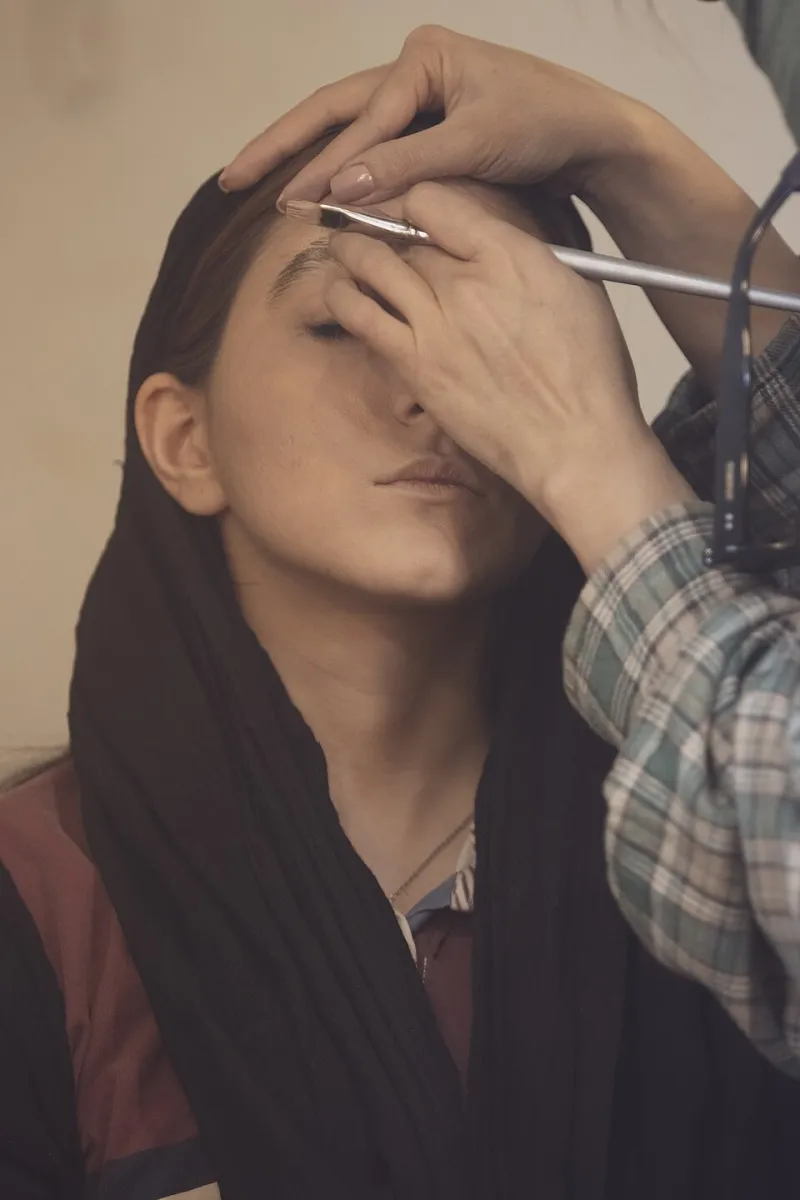
Photo: Mostafameraji, CC0, via Wikimedia Commons
There is a particular kind of expertise that operates almost invisibly. It does not announce itself with credentials or tools. It reveals itself in the moment your stylist reaches for a specific section of your hair before you have said a single word—because they already know that section requires special attention. That quiet competence is the product of something far more sophisticated than technical skill alone. It is the result of deliberate, sustained observation built across every appointment you have ever kept.
At Salon Monty, we refer to this as the accumulated intelligence of the chair. And it is, without question, one of the most underappreciated dimensions of professional grooming.
What a Stylist Actually Retains
Most clients assume their stylist remembers the broad strokes: the general length they prefer, perhaps a color they once tried and abandoned. In reality, a seasoned professional retains far more than that. They hold a layered portrait of you—one that includes how your hair behaves in humidity, which side of your part naturally wants to fall, how your face has shifted subtly over the years, and whether your lifestyle changes have begun to express themselves in your hair's condition.
This is not coincidental recall. It is a disciplined practice of documentation and observation that transforms the stylist-client relationship into something closer to a long-term partnership than a transactional service. Notes are kept. Formulas are recorded. But beyond the written record, there exists an intuitive knowledge that accumulates appointment by appointment, season by season.
Your stylist may remember that you requested a shorter nape the last time you had an important presentation at work. They may have noticed, before you mentioned it, that your ends were drier than usual following a vacation. They may have quietly adjusted your color formula after observing that certain tones were washing out your complexion in a way that had not been apparent a year prior. None of this was announced. It simply happened—because they were paying attention when you were not.
The Problem With Starting Over
This is precisely what is lost when clients cycle through multiple stylists or attempt to replicate their salon results at home. The technical knowledge required to execute a cut or color treatment can be studied and, to some degree, approximated. The contextual knowledge—the years of observation, the memory of where your hair has been and where it is heading—cannot be transferred or rebuilt quickly.
Every new stylist begins at zero. They must gather information through consultation, through touch, through the first appointment's worth of discovery. That process is valuable, and a skilled professional will conduct it thoroughly. But it is a beginning, not a continuation. The client who has worked with the same stylist for three years brings something to the chair that no intake form can fully capture: a living record of change.
Consider what that record contains. It may include a period when stress caused noticeable thinning along the hairline. A pregnancy that altered your texture in ways that surprised you both. A career shift that prompted a more conservative aesthetic, followed by a deliberate move toward something bolder. A gradual softening of your jaw line that called for a quiet recalibration of your layers. These are not details you would think to mention at a first appointment. But they are precisely the details that shape the decisions a skilled stylist makes on your behalf.
Observation as a Professional Discipline
What separates a truly exceptional stylist from a technically competent one is the quality of their attention. The best professionals in this field are trained observers. They notice changes in your scalp health before you have registered any discomfort. They detect shifts in your hair's porosity that signal a need to adjust your care regimen. They read the way you carry yourself—the tension in your shoulders, the way you describe your week—and factor that into the experience they create for you.
This level of attentiveness is not passive. It is an active, ongoing assessment that runs parallel to every service being performed. While your stylist is working through your cut, they are also cataloguing what they see: how your growth pattern has evolved, whether a particular product is building up, how your gray distribution has changed since your last visit. All of this information feeds back into a continuously updated understanding of who you are as a client—and who you are becoming.
At Salon Monty, this kind of attention is not considered exceptional. It is considered essential. The belief that every detail defines you is not merely a philosophy of aesthetics. It is a commitment to knowing each client well enough to serve them in ways they have not yet thought to request.
Why You Cannot Replicate This at Home
Home grooming has its place. A well-maintained routine between appointments is, in fact, something every professional stylist encourages. But there is a ceiling to what self-directed care can accomplish—and that ceiling is, in large part, a matter of perspective.
You cannot see the back of your own head with any real accuracy. You cannot assess your hair's condition with the trained detachment of someone who has observed hundreds of different textures and conditions across thousands of appointments. And you cannot maintain an objective record of your own changes, because you are living inside them. The gradual shift in your face shape over a decade is invisible to you precisely because you witness it incrementally, in daily increments too small to register.
Your stylist, who sees you every six to eight weeks, has the advantage of contrast. They notice what you have stopped noticing. They remember what you have forgotten. They anticipate what you have not yet recognized as a need.
The Relationship Is the Service
There is a tendency to evaluate a salon appointment by its immediate outcome: the cut, the color, the finish. These are, of course, important measures. But the deeper value of a sustained professional relationship is cumulative. It builds over time into something that functions less like a service and more like a strategy—a long-term approach to your appearance that accounts for where you have been, where you are now, and where you are headed.
That strategy is only possible when your stylist knows you well enough to hold your history. When they can reference, without prompting, the formula that worked beautifully two winters ago. When they can gently steer you away from a direction you are excited about because they remember you tried something similar in 2019 and found it difficult to maintain with your schedule. When they can recommend a treatment not because you asked, but because they noticed something three appointments ago and have been monitoring it since.
This is what the most discerning clients come to understand over time: the appointment is not the product. The relationship is. And the stylist who has been quietly learning you, season after season, is offering something that no single visit—however technically flawless—can fully deliver on its own.
The details they remember are the ones that make all the difference.