The Clear-Head Phenomenon: Why Life's Biggest Decisions Often Follow a Trip to the Salon

There is a particular kind of quiet that settles over a person the moment they step out of the salon and onto the sidewalk. The reflection in the glass storefront is familiar yet somehow newly resolved. The shoulders sit a little straighter. The pace, almost imperceptibly, quickens. And somewhere in the hours that follow — over a lunch meeting, during a walk home, or midway through an otherwise ordinary afternoon — a decision gets made. A conversation gets initiated. A long-deferred choice finally finds its answer.
At Salon Monty, we have heard this story more times than we can count. Clients who came in for a trim leave with the clarity to ask for a raise. Those who arrived anxious about a relationship departure having settled something internal by the time they reach their car. Creatives who have been blocked for weeks suddenly find their footing again before dinner. We began calling it the Monty Moment — that distinctive window of elevated thinking that so often follows a professional grooming session.
But what is actually happening inside the mind when the cape comes off?
The Neuroscience of Looking the Part
Researchers in the field of embodied cognition have long understood that the body does not merely house the mind — it actively shapes it. The clothes we wear, the posture we hold, and yes, the way our hair falls across our forehead all send continuous feedback signals to the brain, influencing how we perceive ourselves and, in turn, how we think and behave.
When a professional stylist reshapes your appearance with precision and intention, the brain registers more than an aesthetic upgrade. It registers a shift in identity signal. The phenomenon, sometimes referred to in psychological literature as "enclothed cognition," suggests that when we feel our external presentation aligns with our internal self-concept — or with who we aspire to be — cognitive performance measurably improves. Attention sharpens. Risk tolerance recalibrates. Confidence, which is itself a cognitive state, rises.
A fresh, expertly executed cut or style essentially tells the nervous system: you are ready. And the nervous system, obligingly, responds.
Why the Salon Environment Itself Matters
The clarity that follows a Monty Moment is not produced by the haircut alone. The environment in which the transformation occurs plays a significant and often underestimated role.
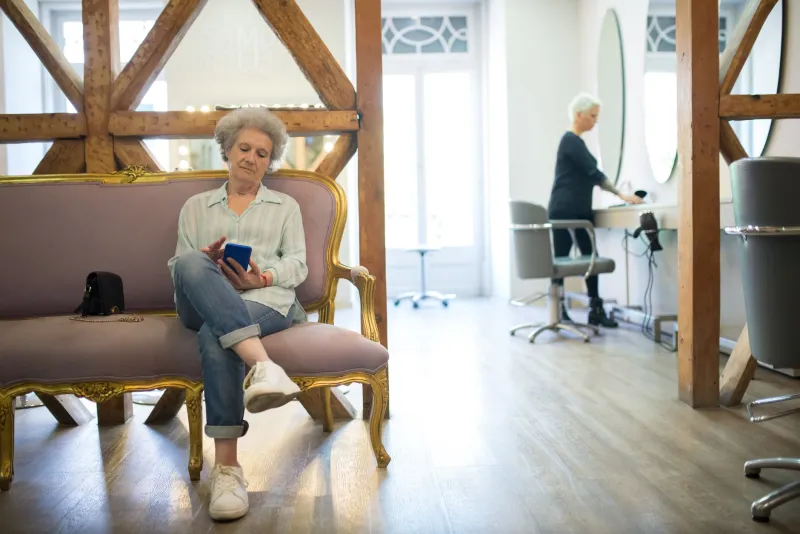
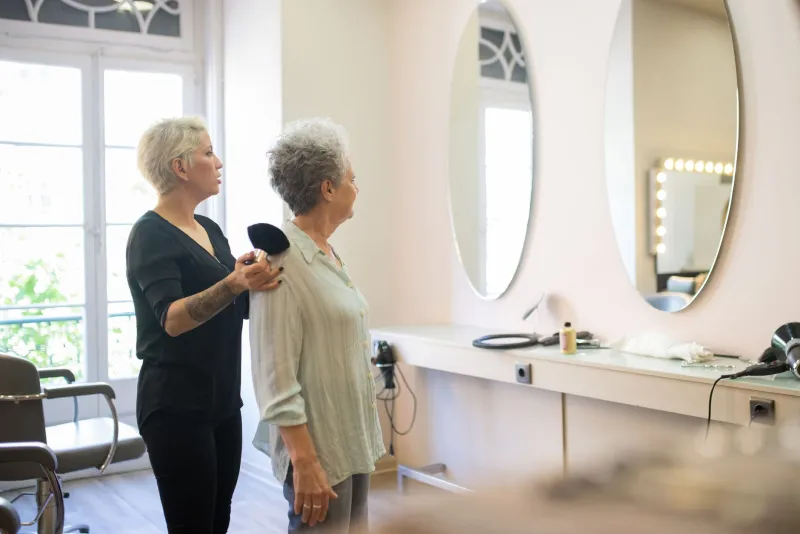
Professional grooming, at its most refined, is one of the few experiences in modern life that demands — and rewards — genuine stillness. For thirty, sixty, sometimes ninety minutes, the phone is set aside. The to-do list recedes. A skilled stylist holds the conversational space with care, asking questions that invite reflection rather than performance. The ambient sound of a well-appointed salon, the measured pace of the appointment, the tactile experience of skilled hands working with intention — all of these elements combine to produce something that functions, neurologically, much like a meditative state.
It is well established that periods of relaxed, unfocused attention — what neuroscientists call the default mode network — are precisely when the brain performs its most sophisticated integrative work. Connections form. Priorities clarify. Problems that resisted direct analysis suddenly yield to an oblique approach. The salon chair, it turns out, is a remarkably effective incubator for the kind of thinking that drives meaningful decisions.
From the Chair to the Conference Room
Consider what happens when a client arrives at Salon Monty before a high-stakes professional engagement. The appointment is not merely cosmetic preparation. It is a form of cognitive priming.
One client — a marketing director in her early forties — described arriving at an important contract negotiation feeling unusually composed after a morning appointment. "I had been dreading that meeting for two weeks," she recalled. "But something about walking in with my hair exactly right made me feel like I already knew how it was going to end. And it ended well."
Another client, a freelance architect, credited a spontaneous Saturday appointment with the breakthrough he needed on a design project that had stalled for a month. "I wasn't even thinking about the project while I was there. But driving home, the solution was just — there. Fully formed."
These accounts are not anomalies. They reflect a consistent pattern that emerges when physical presentation and psychological state are brought into alignment by a skilled professional.
The Identity Alignment Effect
At its core, the Monty Moment is an identity alignment event. Most of us carry a gap — sometimes narrow, sometimes wide — between how we currently present and how we understand ourselves at our best. Professional grooming, executed with genuine expertise and attentiveness to the individual, closes that gap, even temporarily.
When the gap closes, an interesting thing happens: the mental energy that was quietly devoted to managing that dissonance becomes available for other purposes. Decisions that felt heavy suddenly feel manageable. Conversations that seemed risky feel worth initiating. Creative problems that appeared intractable reveal new angles.
This is not magic. It is the practical consequence of reducing internal friction. When you look the way you believe you should look — when every detail, from the line of your cut to the texture of your finish, reflects an intentional and confident version of yourself — the mind is freed to operate at a higher level.
Designing Your Own Monty Moment
Understanding this phenomenon has practical implications for how you approach your grooming appointments. Rather than treating a salon visit as a reactive necessity — something you do when things have grown unruly — consider positioning it as a deliberate cognitive tool.
Schedule your appointment before the meeting, the interview, the difficult conversation, or the creative sprint, not after. Arrive with genuine openness to the consultation. Allow the stylist to do more than execute a request; invite them to offer perspective. The quality of a Monty Moment is directly proportional to the quality of the experience that precedes it.
At Salon Monty, every appointment is designed with this understanding at its center. The consultation is not a formality. The environment is not incidental. The expertise brought to each chair is not merely technical — it is calibrated to produce the kind of transformation that extends well beyond the mirror.
The Hours That Follow
The Monty Moment does not announce itself. It arrives quietly — in the middle of a conversation, at the edge of a decision, somewhere between the salon and wherever life is taking you next. But those who have experienced it recognize it immediately: that particular combination of clarity, confidence, and forward momentum that makes the next step feel not just possible, but obvious.
The chair is where it begins. What happens after is entirely yours.