Dressed to Perform: The Psychology of Grooming When the Stakes Are High
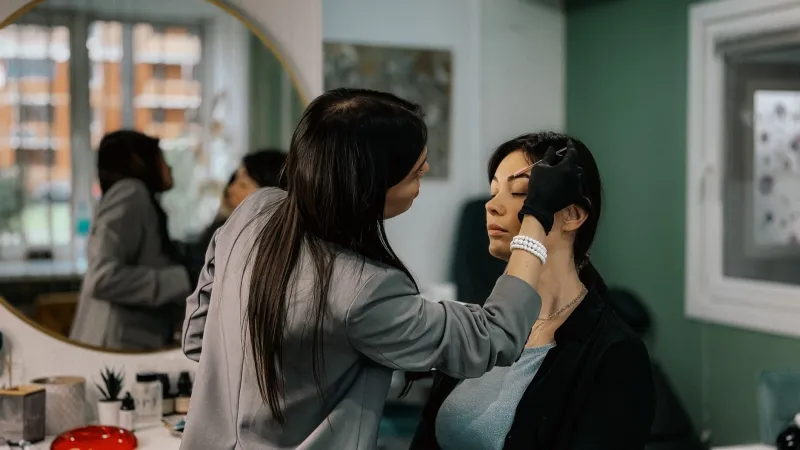
There is a particular kind of pressure that precedes a job interview, a major presentation, or a first impression that genuinely matters. Your pulse quickens. You rehearse your talking points. You choose your outfit with unusual care. And yet, for many people, the one element most closely linked to their internal confidence — their hair — receives only a fraction of that same deliberate attention.
This is worth examining. Not because appearance is everything, but because the research increasingly suggests it matters far more than most of us are comfortable admitting.
What Behavioral Science Actually Says
The concept of "enclothed cognition," introduced by researchers Hajo Adam and Adam Galinsky at Northwestern University, proposes that the clothes and, by extension, the grooming choices we make do not merely signal identity to others — they actively influence the wearer's own cognitive performance. Participants in their studies who wore a lab coat described as belonging to a doctor demonstrated measurably higher levels of focused attention than those who wore the same coat described as a painter's smock. The garment was identical. The psychological effect was not.
Apply this principle to grooming and the implications become striking. When your hair looks precisely the way you intended — when the cut falls cleanly, when the style holds, when your reflection matches the version of yourself you are trying to project — something shifts internally. Psychologists refer to this as a form of self-concept clarity. You feel coherent. Unified. Ready.
Conversely, when your hair is overdue for a cut, when last night's product has left an unpredictable texture, or when the style you attempted at home falls short of your vision, a low-grade distraction sets in. It is rarely conscious. But it occupies bandwidth that your performance in high-stakes moments cannot afford to lose.
The Interview Room Scenario
Consider Marcus, a financial analyst in his mid-thirties who came to Salon Monty two weeks before a pivotal interview for a senior director role. He was technically more than qualified. His resume was polished. His preparation was thorough. But he arrived at his first appointment admitting something quietly significant: he had been walking into interviews feeling like a slightly earlier version of himself — the version from three years ago, before a promotion that had genuinely changed his professional identity.
The issue, as his stylist quickly identified, was not dramatic. His cut was simply outdated relative to the person he had become. The silhouette was softer than his current role demanded. A more structured, tapered cut — one that aligned with his actual seniority rather than his former position — produced a visible shift in how he carried himself, even in the salon chair. He sat differently. He spoke with greater directness.
He got the role. Whether the haircut was causal or merely coincident is, in some ways, beside the point. He walked into that room feeling like the person he was presenting himself to be. That alignment is not vanity. It is strategy.
First Impressions and the Compression of Judgment
Research from Princeton University suggests that people form meaningful first impressions in as little as one-tenth of a second — well before a handshake, a word, or a smile can intervene. Hair, as one of the most immediately visible aspects of a person's appearance, contributes heavily to this compressed evaluation. It communicates care, attention, and intentionality — or their absence.
This is not about conforming to a single standard of attractiveness. It is about coherence. When your grooming reflects a deliberate point of view — when every detail appears considered rather than accidental — observers register competence and self-assurance almost automatically. The impression formed may not be entirely accurate, but it creates an environment in which you are more likely to be heard, trusted, and taken seriously from the outset.
For first dates, this dynamic operates with equal force, though the emotional stakes feel different. Romantic first impressions are governed by the same rapid-fire judgments, and the confidence you carry into that encounter — the ease with which you move through a room, the clarity with which you communicate — is quietly supported or undermined by how settled you feel in your own skin.
The Presentation Paradox
Public speaking anxiety is among the most commonly reported fears in the United States. What is less frequently discussed is the extent to which pre-performance grooming rituals can serve as genuine anxiety-management tools. Not because a good haircut eliminates nerves, but because it removes one variable from an already crowded mental landscape.
When clients at Salon Monty schedule appointments specifically in advance of major presentations, keynote addresses, or milestone events, they often describe the same experience afterward: they spent less mental energy during the event managing self-consciousness about their appearance. That recovered attention went directly into the delivery itself — into eye contact, into responsiveness to the room, into the kind of present-moment awareness that separates adequate performances from memorable ones.
The preparation, in other words, becomes part of the performance.
Strategic Investment, Not Surface Vanity
The distinction worth drawing here is between grooming as a reactive habit and grooming as a proactive tool. Most people address their hair when it demands attention — when it has grown past a comfortable length, when an event forces the issue. The more intentional approach is to treat professional styling appointments as preparation for the moments that matter, not merely maintenance between them.
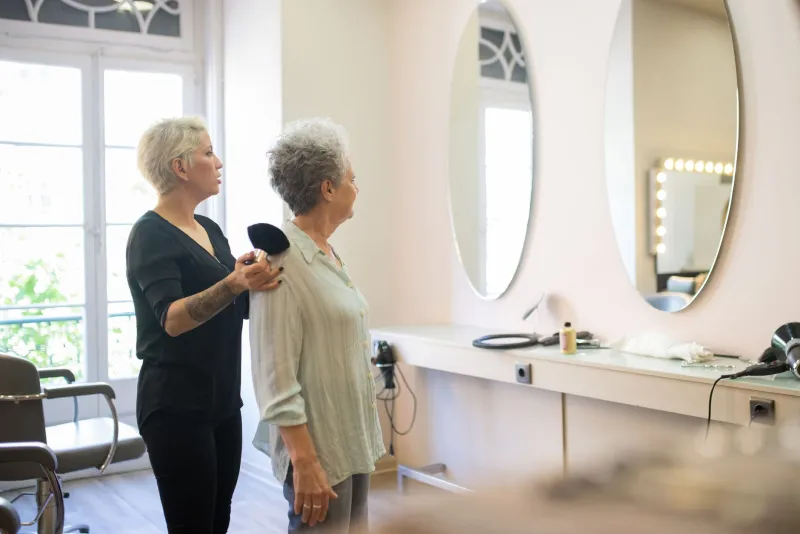
This means scheduling with intention. It means arriving at a consultation prepared to discuss not just what you want your hair to look like, but where you are going and what you need to feel when you get there. A skilled stylist does not simply execute a technical service — they help you construct a version of your appearance that serves your actual life, your actual ambitions, and the specific high-pressure moments on your horizon.
The Detail That Does the Work
At Salon Monty, our foundational belief is that every detail defines you. This is not a statement about perfectionism. It is an acknowledgment that the details you choose — and the care with which you choose them — communicate something essential about how seriously you take yourself, your work, and the people in front of you.
In the moments that carry the most weight, your confidence is not solely a product of preparation and talent. It is also a product of coherence — the quiet assurance that comes from knowing your exterior reflects your interior with accuracy and intention.
That coherence begins long before you walk into the room. It begins in the chair.