Shades of Influence: What Your Hair Color Communicates Before You Say a Word
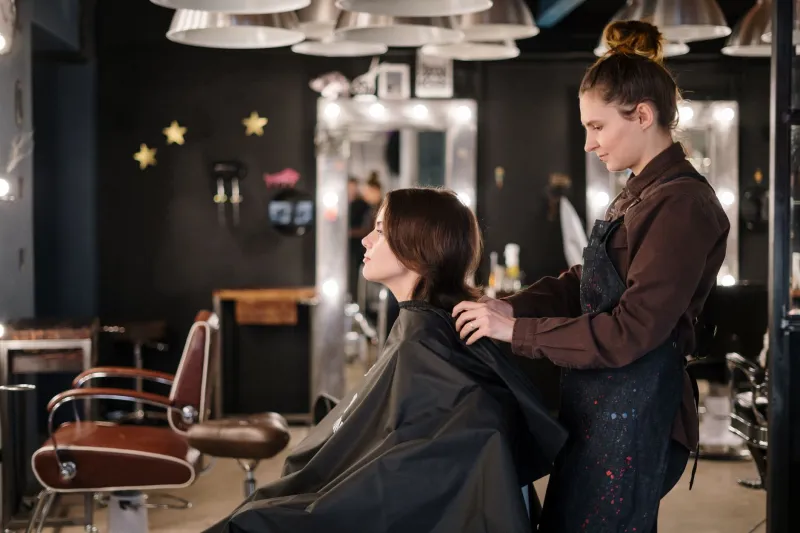
Before you walk into a room, before you extend a hand or offer a greeting, your hair color has already introduced you. It is a detail so constant, so visible, that most people process it without realizing they are forming an impression at all. At Salon Monty, where every detail defines you, we have long understood that color is not merely an aesthetic choice — it is a form of communication.
Color psychology, the study of how hues affect human behavior and perception, has been applied to branding, interior design, and marketing for decades. Yet its application to personal appearance — and specifically to hair — remains underexplored in everyday conversation. That gap is precisely where transformative styling decisions are made.
The Science Behind the Shade
Color theory tells us that warm tones — rich coppers, golden blondes, honey browns — tend to register as approachable, energetic, and open. Cool tones, such as platinum, ash, and deep espresso, often project sophistication, precision, and authority. Neither spectrum is superior; rather, each serves a different communicative purpose depending on context.
Research published in behavioral science journals has consistently demonstrated that observers make rapid judgments about personality traits based on hair color. While these judgments are not always accurate, they are real — and they influence everything from first dates to job interviews. A stylist who ignores this dimension is only doing half the work.
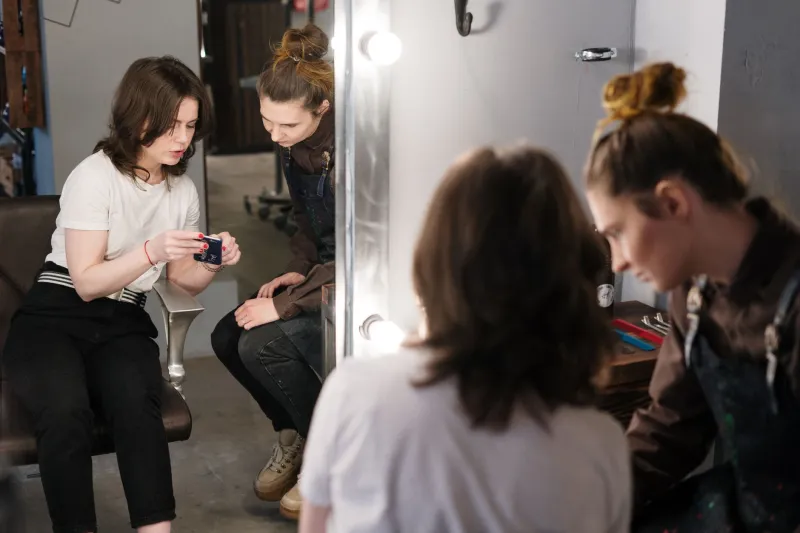
At Salon Monty, our colorists approach every consultation by asking not just what a client wants to look like, but how they want to feel and what they want to project. Those are three distinct questions, and the answers do not always align automatically.
Skin Tone as the Foundation
One of the most common misconceptions about hair color is that it is primarily a trend decision. In reality, the most enduring and flattering choices are rooted in the relationship between pigment and skin tone.
Clients with warm undertones — those whose veins appear more green than blue, whose skin glows gold or peach in natural light — typically find that shades with amber, caramel, or copper undertones create a harmonious, luminous effect. The warmth in the hair echoes the warmth in the complexion, producing a cohesive presence that reads as polished and intentional.
Cooler undertones, characterized by pink or bluish hues beneath the skin, tend to respond beautifully to ashier, more neutral, or jewel-toned shades. Platinum, cool brunette, and deep violet-blacks can look striking against fair or deeper cool-toned complexions in ways that warmer shades simply cannot replicate.
For clients with neutral undertones, the entire spectrum becomes available — a position of remarkable creative freedom that we encourage them to explore rather than default to the safest option.
Personality, Purpose, and the Professional Dimension
Beyond skin tone, the question of personality alignment matters enormously. A client who is naturally reserved but craves visibility might find that a strategically placed balayage — rather than an all-over dramatic change — provides the lift in confidence they are seeking without feeling like a costume. Conversely, someone preparing for a professional pivot or a major life transition often finds that a decisive color change serves as a powerful psychological reset.
One of our clients, a mid-level marketing executive from Chicago, came to Salon Monty feeling invisible in her own office. She had been wearing the same flat, single-process brown for nearly six years. After an extended consultation — the kind we take pride in offering — she transitioned to a dimensional chestnut with subtle copper highlights. The technical change was moderate. The psychological shift was profound. Within weeks, she reported that colleagues were engaging with her differently in meetings, that she was speaking up more readily, and that she felt, in her own words, "like myself again, but louder."
That is the confidence code in action.
Color and Context: Reading the Room Before You Enter It
Different environments carry different color expectations, and navigating them thoughtfully is part of what we guide our clients through. In more conservative professional settings — finance, law, corporate consulting — dramatic color choices can sometimes introduce friction before a client has had the chance to demonstrate their competence. This is not a reason to abandon personal expression; it is a reason to be strategic about it.
A beautifully executed deep auburn or a polished dark blonde can satisfy both a client's desire for change and the understated expectations of a formal boardroom. In creative industries, the calculus shifts entirely. Bold color choices — vivid fashion tones, striking contrasts — can actually reinforce a personal brand built around originality and vision.
Social contexts carry their own dynamics. Studies in social psychology suggest that individuals with brighter or more distinctive hair colors are often perceived as more extroverted and approachable in casual settings, which can accelerate connection in networking environments outside the office.
The Art of Intentional Color at Salon Monty
What distinguishes a color service at Salon Monty from a standard appointment elsewhere is the depth of intention we bring to the process. Our colorists are trained not only in formulation and technique but in the consultative conversation that precedes it. We ask about your calendar. We ask about your goals. We ask about the last time you looked in the mirror and felt genuinely, completely like yourself.
Those answers shape the formula as much as any color wheel.
Choosing a hair color without understanding its psychological dimensions is like selecting a wardrobe based solely on what is on sale. The result may be functional, but it rarely feels defining. The right shade — one that honors your skin, reflects your personality, and serves your professional and personal life — does something far more significant.
It changes how you walk into a room. And that changes everything that follows.