Growing Through It: A Stage-by-Stage Guide to Navigating Your Most Ambitious Hair Transformation
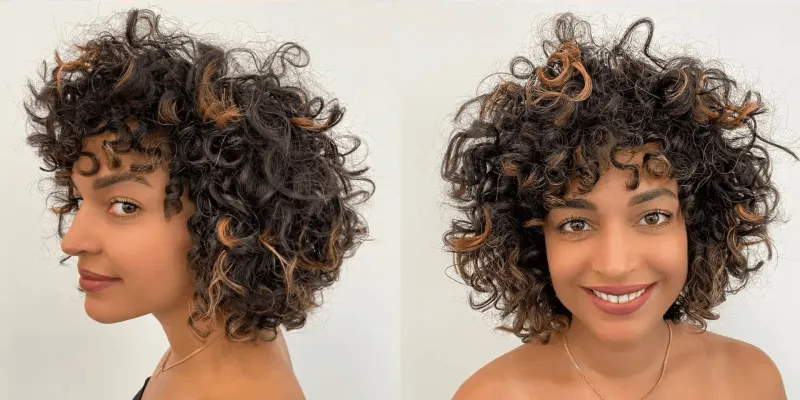
Photo: woman hair transformation salon natural texture curly hair growth stages, via serratostyle.com
Every significant hair transformation begins with a decision — and then, almost immediately, with a question: Now what?
Whether you have just left the salon with a dramatically shorter cut and are already wondering how to get back to length, or you have decided to stop chemically relaxing and are facing the reality of two different textures growing simultaneously, or you are midway through a color correction that requires multiple sessions to complete — the journey ahead is real, and it deserves a real roadmap.
At Salon Monty, we believe that transformation is not a single appointment. It is a relationship between you, your hair, and the expert guidance that carries you from where you are to where you want to be. This guide is designed to make every stage of that journey feel navigable.
Understanding the Nature of Hair Transformation
Before mapping the stages, it is worth establishing a fundamental truth: hair does not transform overnight, and the attempt to accelerate that process is frequently what causes lasting damage.
The average human scalp produces approximately half an inch of hair growth per month. Texture transitions, color shifts, and structural changes each carry their own biological and chemical timelines that cannot be meaningfully compressed. What can be managed is how you care for your hair at each stage, how you style it through the awkward phases, and how aligned your expectations are with reality.
A professional partnership — one that includes regular check-in appointments, not just the initial transformation session — is the single greatest predictor of a successful outcome.
Stage One: The Decision and the Consultation (Weeks 1–2)
Every transformation begins before a single scissor cuts or color formula is mixed. The consultation stage is, arguably, the most important.
During this phase, your stylist at Salon Monty will assess the current condition of your hair, discuss your target outcome, and establish an honest timeline. This is the moment to ask every question you have been holding — and to listen carefully to the answers, even when they involve timelines longer than you hoped.
For a pixie-to-shoulder-length grow-out, expect a minimum of 18 to 24 months to reach a style that feels intentional rather than transitional. For a full texture transition from chemically processed to natural hair, the timeline depends on your current length and growth rate, but most clients navigate 12 to 18 months before the majority of their hair reflects its natural pattern. A color family shift — from a platinum blonde to a rich brunette, for example — can require anywhere from one to four sessions depending on the current state of the hair and the target depth.
Knowing these numbers at the outset prevents the discouragement that derails many transformations prematurely.
Stage Two: The Awkward Phase (Months 1–6)
Every transformation has one. The awkward phase is the period during which your hair is neither what it was nor what it will become, and styling it requires the most creativity and patience.
For grow-outs, this typically means managing a cut that has lost its original shape but has not yet achieved enough length to be restyled. During this period, regular trims — counterintuitive as they may feel — are essential. Removing split ends and reshaping the perimeter every six to eight weeks prevents the scraggly, unintentional appearance that makes grow-outs feel discouraging.
For texture transitions, the awkward phase involves managing two distinct textures simultaneously: the new, natural growth at the root and the previously processed hair at the ends. Protective styling — braids, twists, updos — becomes your most reliable tool during this period, reducing manipulation and minimizing breakage at the line of demarcation where the two textures meet.
For color transitions, this stage may involve toning appointments to keep your color looking intentional as it grows or fades, rather than allowing it to drift into unplanned territory.
Key focus during this stage: Moisture, protection, and professional guidance every six to eight weeks without exception.
Stage Three: The Emerging Shape (Months 6–12)
By the midpoint of most transformations, something encouraging happens. The new direction begins to reveal itself.
Grow-out clients often reach a length during this stage that allows for genuine styling options — a tucked bob, a half-up style, or a blunt cut that feels deliberate. This is the stage to have a conversation with your stylist about whether the shape is growing in the direction you envisioned, and to make any necessary adjustments to the plan.
Texture transition clients frequently find that this stage brings the most profound discovery — learning, often for the first time as an adult, what their natural curl or coil pattern actually looks like. Hydration becomes the central priority. A routine built around a quality leave-in conditioner, a curl-defining cream or gel appropriate for your porosity, and a weekly deep conditioning treatment will determine how well your natural texture thrives.
For color transformations, this stage often marks the point at which the target shade has been achieved or is within one session of completion. Maintaining that color's vibrancy now becomes the primary concern — which means using color-safe products, minimizing heat exposure, and scheduling gloss treatments every six to eight weeks.
Stage Four: The Maintenance Rhythm (Month 12 and Beyond)
The final stage of any transformation is not an endpoint — it is the establishment of a sustainable routine.
At this stage, the work shifts from navigation to stewardship. Your hair has largely arrived at its destination, and the task now is to maintain its health, integrity, and appearance with a consistent professional schedule and an informed home care routine.
For clients who have completed a grow-out, this means committing to the regular trims and styling appointments that keep the achieved length looking polished rather than neglected. For texture transition clients, it means continuing to invest in the moisture-rich routine that has carried them through the journey. For color clients, it means understanding the specific maintenance demands of their chosen shade family and planning accordingly.
Partnering Through Every Phase
What distinguishes a successful hair transformation from an abandoned one is rarely the quality of the initial decision. It is the quality of the support system throughout the process.
At Salon Monty, we are designed to be that support system — not simply for the dramatic appointment that initiates a change, but for every stage that follows. Our stylists track your progress, adjust the plan when the hair requires it, and provide the expertise that transforms a potentially frustrating process into a genuinely rewarding one.
Your hair is always growing, always changing. The question is simply whether that change is being guided.
When it is, the destination is almost always worth the journey.