The True Price of Your Hair: Rethinking What 'High-Maintenance' Actually Costs You
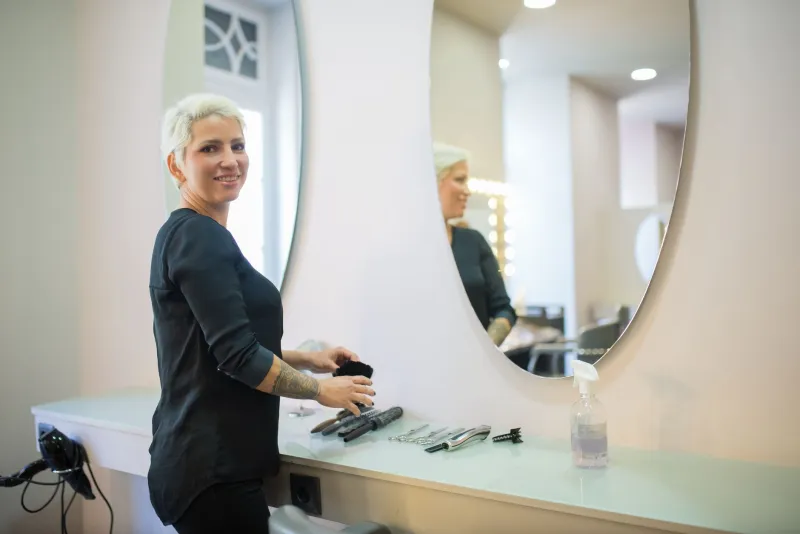
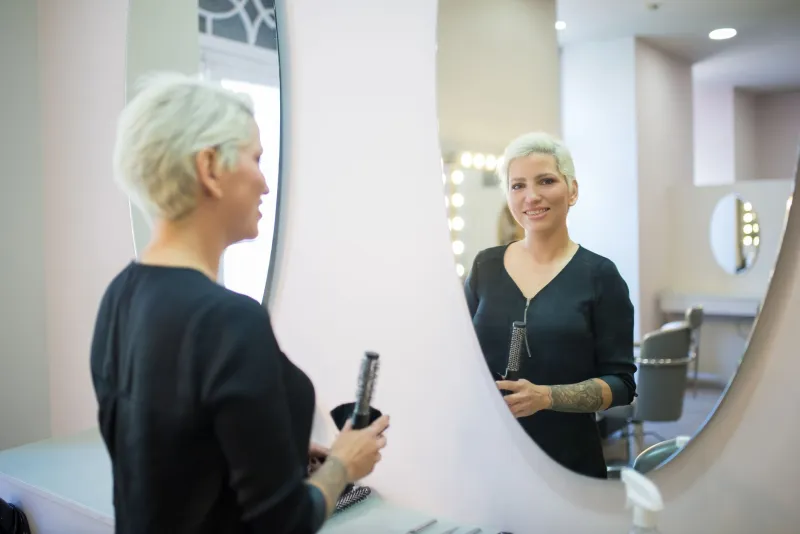
At some point, almost every client sitting in our chair has said some version of the same thing: "I want something easy to manage." It is a reasonable request, and we take it seriously. What we have learned over years of personalized consultations at Salon Monty, however, is that the word easy means something different to nearly everyone who says it — and that the styles most commonly labeled low-maintenance are frequently anything but.
The gap between how a hairstyle looks on a curated Instagram feed and what it actually demands of a real person with a real schedule is one of the most consequential misunderstandings in modern grooming. This guide exists to close that gap.
Defining the Terms: What Does 'Maintenance' Actually Mean?
Before any meaningful comparison can be made, the concept of maintenance needs to be disaggregated. There are at least four distinct dimensions to consider:
Salon frequency — How often must you return for a cut, color refresh, or treatment to keep the style looking intentional rather than neglected?
Daily styling time — How many minutes does the style require each morning to look presentable?
Product investment — What does the ongoing cost of shampoos, conditioners, treatments, and styling tools add up to over a year?
Skill threshold — Does maintaining this style require a level of technical skill with tools that most people do not possess?
A style that scores low on one dimension can score extremely high on another. Failing to evaluate all four is how people end up frustrated with a haircut they chose specifically because it seemed simple.
The Myth of the 'Wash-and-Go' Cut
The pixie cut and the blunt bob are perennial favorites among clients seeking low-effort styling. And it is true that both styles eliminate the time spent managing length. What they introduce, however, is a significantly compressed salon timeline.
A well-executed pixie cut typically requires a trim every four to six weeks to maintain its shape. At an average cost of $65 to $95 per cut in most U.S. metropolitan areas, that translates to between $650 and $1,140 annually — before tip. Miss even one appointment by two weeks, and the style can begin to look shapeless rather than chic.
The blunt bob presents a similar equation. Its architectural precision is precisely what makes it striking, and that precision erodes quickly. Clients who stretch their appointments to every eight or ten weeks often find themselves in a cycle of perpetual growing-out rather than enjoying the look they originally committed to.
Long Hair: The Hidden Efficiencies
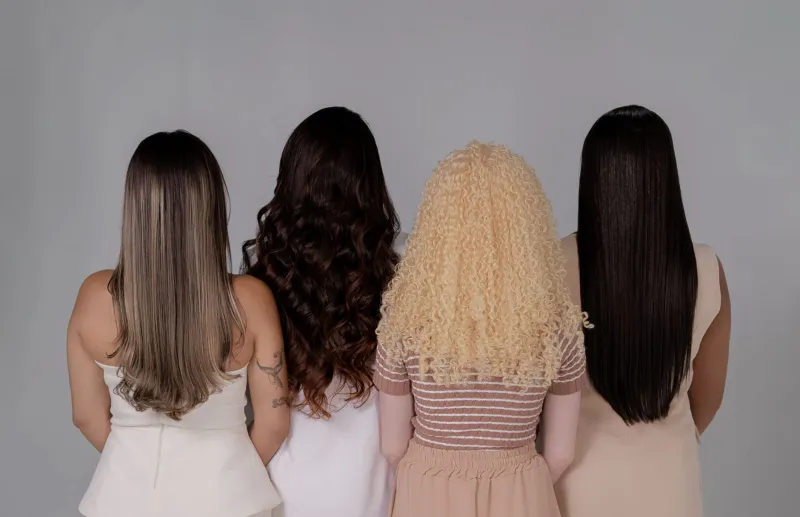
Long hair carries an unfair reputation for complexity. In practice, a healthy, well-cut layer of long hair — maintained with the right products and trimmed every ten to twelve weeks — can be extraordinarily efficient for the right person.
The styling options are diverse: a low bun, a braid, or simply air-drying with a quality leave-in conditioner. For clients whose mornings are genuinely rushed, long hair that can be gathered and secured in under two minutes often outperforms a shorter style that requires blow-drying and product application to look polished.
The annual salon cost for long hair maintenance, assuming trims only, typically runs between $260 and $480 — considerably less than the pixie or bob scenario outlined above.
The caveat, and it is an important one, is that long hair demands consistent at-home care. Skimping on conditioning treatments or heat protectants will manifest visibly and quickly. The investment here shifts from the salon to the medicine cabinet.
Color Services: Where the Real Numbers Live
For clients who color their hair, the maintenance calculation becomes substantially more complex — and the stakes of choosing the wrong technique rise considerably.
All-over single-process color, particularly for clients covering gray or making a dramatic shade change, typically requires touch-ups every four to six weeks. At an average of $80 to $150 per service, the annual cost ranges from roughly $700 to $1,800. Factor in color-safe shampoo, weekly conditioning masks, and the occasional gloss treatment to maintain vibrancy, and the true annual spend for a seemingly simple color service can easily exceed $2,000.
Balayage and other freehand techniques, by contrast, are specifically designed for longevity. Because the color is applied away from the root and blends gradually into the natural base, the grow-out is intentional rather than obvious. Many clients return for a refresh only every three to five months. Over the course of a year, this can represent a meaningful reduction in both salon visits and cumulative cost — despite the higher per-appointment price tag.
This is a calculation we walk through with every color client at Salon Monty. The upfront investment in a well-executed balayage frequently results in lower annual spending than a less expensive but more frequent single-process service.
The Daily Minute Count: An Honest Assessment
Here is a practical framework we recommend: track your actual morning hair routine for one week, in minutes. Most people significantly underestimate how long their current routine takes and significantly overestimate how much time a new style will save them.
A textured lob that photographs beautifully often requires a diffuser, two styling products, and fifteen to twenty minutes of technique to achieve its effortless look. A sleek, straight style on naturally wavy hair may demand a flat iron and a smoothing serum every single morning. Neither is wrong — but neither is accurately described as low-maintenance without qualification.
Making the Right Choice for Your Actual Life
At Salon Monty, our consultations are designed to surface exactly these kinds of practical realities before any scissors are lifted. We ask about morning schedules, travel frequency, gym habits, and product budgets — because the most flattering hairstyle is ultimately the one a client can sustain with confidence and consistency.
The ideal style is not the one that requires the least effort in theory. It is the one whose specific demands align with your specific life. That alignment is what transforms a haircut from a recurring source of frustration into a genuine expression of who you are.
Every detail defines you. Make sure the details you choose are ones you can actually keep.