Hair Through the Years: Understanding and Embracing Every Shift in Texture, Density, and Behavior
There is a particular frustration that many people experience when a product or technique that worked beautifully for years suddenly stops delivering. The shampoo that once left your hair voluminous now seems to weigh it down. The style you have worn for a decade no longer holds the way it used to. The culprit is rarely the product — it is time itself. Hair is a living system, and like every biological system, it evolves. Understanding the forces behind that evolution is not merely an academic exercise. It is the foundation of a grooming strategy that remains effective and intentional regardless of where you are in life.
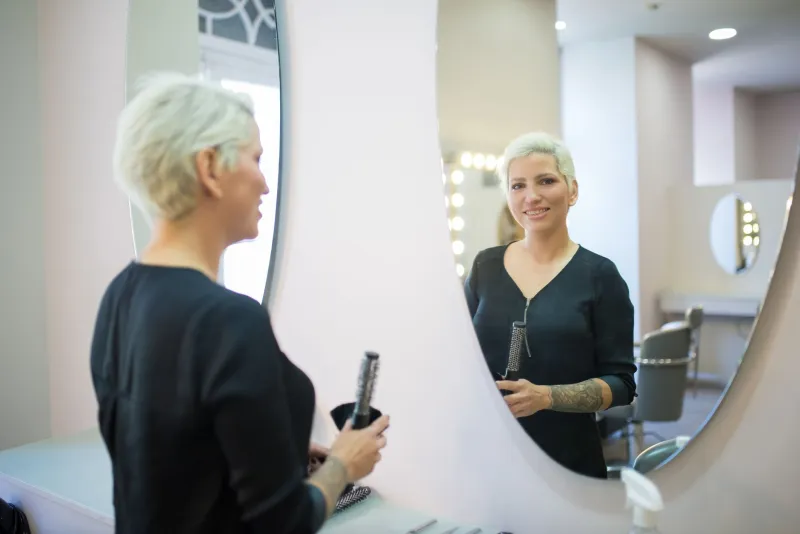
At Salon Monty, we believe that a truly personalized experience begins with knowledge. The most skilled stylists do not simply cut and style — they read the hair in front of them, understand its history, and anticipate where it is headed. What follows is a decade-by-decade examination of how hair changes and what those changes actually mean for the way you care for and style it.
The Twenties: Peak Performance, Hidden Patterns
For most people, the twenties represent hair at its biological peak. Follicles are dense, sebaceous glands are active, and the hair shaft itself tends to be thick and resilient. This is the decade when many people establish the habits — both good and inadvertent — that will define their hair health for years to come.
However, the twenties are also a period of significant hormonal fluctuation. Birth control, pregnancy, postpartum recovery, and even the chronic stress that often accompanies early career life can all alter the scalp's behavior. Some people notice their naturally straight hair developing a slight wave; others experience increased oiliness or, conversely, unexpected dryness.
The most valuable investment during this decade is establishing a professional relationship with a skilled stylist. A thorough consultation — one that examines your scalp health, natural growth patterns, and lifestyle — will reveal the tendencies your hair already has and the direction it is likely to take. Think of it as setting a strong foundation before the renovation begins.
The Thirties: The Subtle Shift Begins
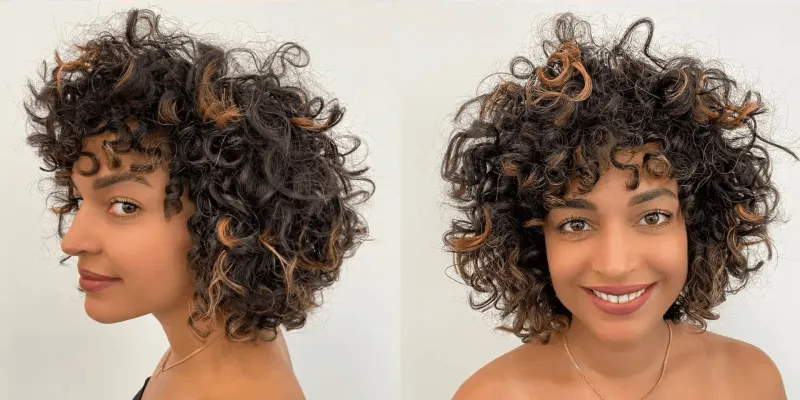
The thirties are often described as the decade of quiet change. Density may begin to decrease slightly as follicle cycling slows. Hair that was once coarse and abundant might start to feel finer in individual strands, even if overall volume has not dramatically changed. For those with naturally curly or wavy hair, the curl pattern may loosen or become less uniform. Straight hair may develop a new unpredictability, particularly around the hairline.
Hormonal transitions continue to play a significant role, especially for women navigating perimenopause in their late thirties. Androgens, estrogen, and thyroid function all exert measurable influence over follicle behavior, and changes in any of these can manifest first in the hair.
From a styling standpoint, the thirties are an excellent time to reassess your cut. Shapes that relied on density to hold their form may need architectural adjustments — more precise layering, for instance, or a slightly shorter length to restore the appearance of volume. A professional stylist can identify these opportunities before they become frustrations.
This is also the decade to become more deliberate about scalp care. The scalp is, quite literally, the soil from which your hair grows, and investing in its health now pays compounding dividends later. Scalp treatments, proper exfoliation, and targeted serums are no longer optional accessories — they are strategic tools.
The Forties: Texture Reimagined
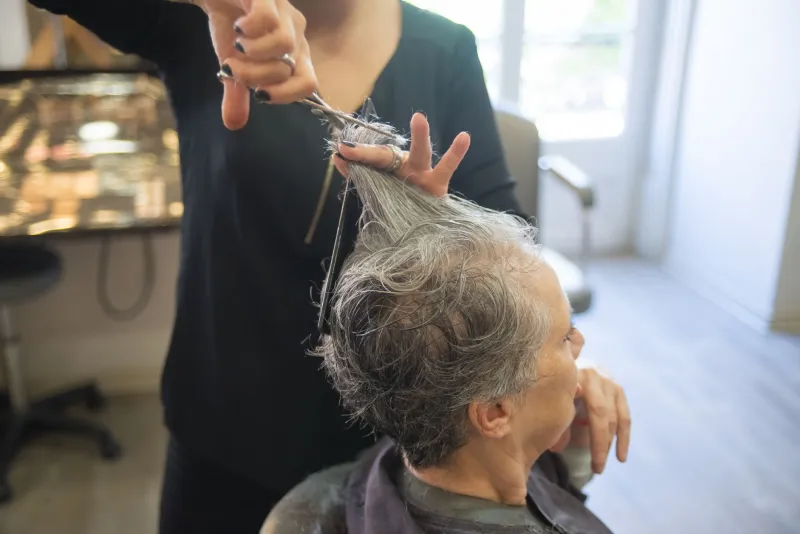
The forties bring changes that are often more pronounced and more visible. Melanin production in the follicle begins to slow for many people, introducing gray or white strands that carry a different texture than pigmented hair — often coarser, more porous, and more resistant to styling. At the same time, overall density may decrease more noticeably, and the hair shaft itself may become finer.
For many, this is the decade when the relationship with heat styling shifts. Hair that once bounced back from daily blowouts may now show signs of stress more readily. The cuticle, which protects the hair shaft, becomes less efficient at retaining moisture as the years pass, making the hair more susceptible to frizz, breakage, and dullness.
Rather than viewing these changes as losses, consider them invitations to evolve. A master colorist can use strategic highlights or a blended gray technique to work with the natural shift in pigmentation rather than against it. A stylist who understands the unique properties of silver and transitioning hair can craft a cut that flatters the new texture rather than fighting it. This is precisely the kind of nuanced, individualized service that defines the Salon Monty experience.
Deep conditioning treatments, bond-building services, and professional gloss treatments can restore luminosity and manageability to hair that has become more porous with time. These are not indulgences — they are maintenance.
The Fifties and Beyond: Refinement Over Resistance
By the fifties, the changes that began quietly in earlier decades have become fully established. Follicle density has typically decreased by a measurable percentage, and the hair cycle — the process by which each strand grows, rests, and sheds — slows considerably. For some, this means a noticeable reduction in overall volume. For others, the primary concern is texture: hair may feel wiry, dry, or unusually fragile.
Hormonal shifts associated with menopause are a significant factor for many women during this period. Estrogen's protective influence on the hair follicle diminishes, and the resulting changes can be striking. Men, too, experience follicle sensitivity to dihydrotestosterone (DHT) that may accelerate thinning at the crown or temples.
The most effective approach at this stage is one of refinement. Styles that work with reduced density — rather than attempting to recreate the volume of decades past — tend to look far more polished and intentional. Shorter cuts, strategic layering, and precision styling can create the illusion of fullness without placing additional stress on fragile strands. A stylist who understands the mechanics of aging hair will never simply replicate what worked at thirty. They will design something that is equally compelling and far better suited to the hair you have today.
Professional scalp treatments take on renewed importance as well. Stimulating circulation, maintaining a balanced scalp environment, and addressing any thinning proactively can significantly influence the quality and longevity of the hair you retain.
The Constant: The Value of a Trusted Professional
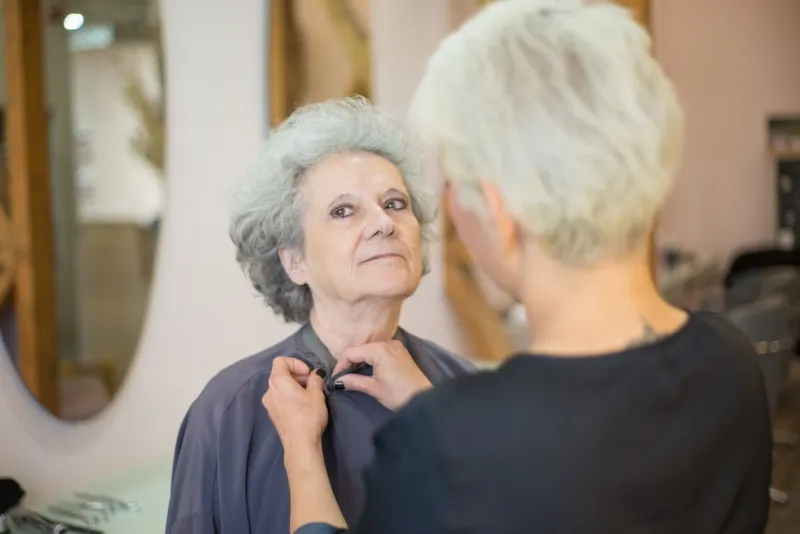
What remains consistent across every decade is the value of working with a stylist who sees your hair not as a static canvas but as a dynamic system. The most flattering style at any age is the one that is designed in partnership with your hair's actual behavior — not imposed upon it.
At Salon Monty, every appointment begins with a conversation. We ask not just about the look you want, but about how your hair has been behaving, what has changed, and what your daily routine actually allows. Because where every detail defines you, the details of your hair's evolution deserve to be understood — and honored.
Your hair's story is long, and every chapter deserves to be well-styled.