Before the Outfit, Before the Room: The Quiet Power of a Well-Timed Haircut
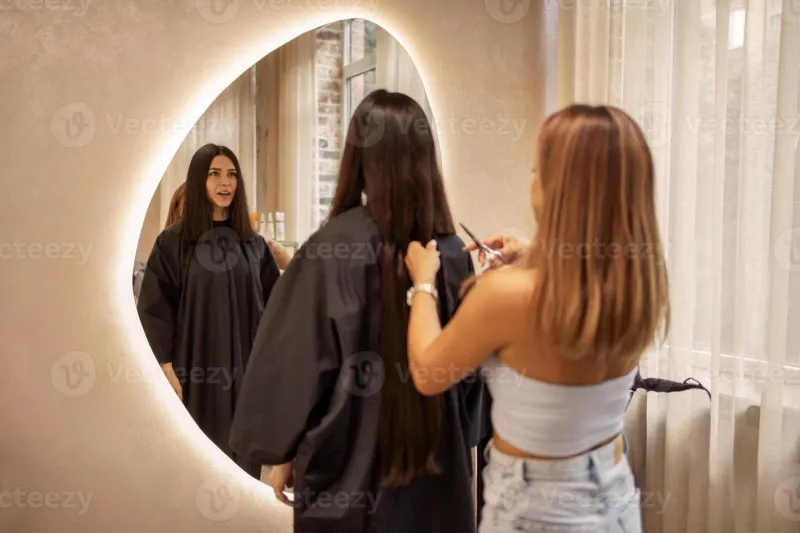
Photo: woman confident fresh haircut salon mirror professional styling, via static.vecteezy.com
There is a particular kind of confidence that arrives before you say a word. It settles into your posture before you reach for the door handle. It influences the angle of your chin as you walk into a meeting, the ease with which you extend a hand, the unhurried quality of your voice when you finally do speak. Most people attribute this quality to what they are wearing. The research, however, tells a more nuanced story.
Your hair—specifically, the deliberate, professionally executed state of your hair—may be doing more psychological work on your behalf than any suit, dress, or pair of shoes you own.
What the Science Actually Says
The connection between physical appearance and psychological state is well-documented in behavioral research. A concept known as enclothed cognition, introduced by psychologists Hajo Adam and Adam Galinsky, demonstrated that wearing specific garments can alter cognitive performance and self-perception. What is less frequently discussed is how this same mechanism applies with equal—and in some studies, greater—force to hair.
Hair frames the face. It is the first feature most people register in another person, and it is the element of appearance most closely associated with identity, vitality, and social status across virtually every culture studied. When that frame is intentional and well-maintained, the psychological signal it sends is immediate and multidirectional: outward to the people who observe you, and inward to the version of yourself doing the observing.
A 2016 study published in the International Journal of Cosmetic Science found that participants who had recently received a professional haircut reported measurable increases in self-esteem and perceived social confidence. Crucially, these effects were not limited to satisfaction with appearance—they extended to how participants anticipated being treated in professional and social contexts. In other words, a fresh cut did not just change how people looked. It changed how they expected the world to respond to them, and that expectation, reliably, changed how the world did.
The Presence Problem No Wardrobe Can Solve
Consider the last time you walked into a high-stakes situation feeling genuinely, effortlessly prepared. Recall the specific quality of that readiness—how it expressed itself physically. Chances are, your hair was exactly where you needed it to be.
Now consider the inverse. Think of a moment when an important opportunity arrived before your next appointment. When you were a few weeks past due and could feel it. When the shape had softened at the edges, the style had lost its architecture, and no amount of product was quite compensating. Most people in that situation report a subtle but persistent distraction—a background awareness that something is slightly off, a fraction of attention perpetually redirected toward managing an appearance that is no longer fully managed.
That fraction matters. Presence, the quality that makes people lean in rather than drift away, requires the full allocation of your attention. A haircut that is working correctly disappears into confidence. One that is not becomes a quiet tax on your focus.
Why Hair Outperforms the Outfit
Clothing is chosen and changed. It signals intention, taste, and economic position—all meaningful things. But hair is continuous. It travels with you through every context, every lighting condition, every unexpected encounter. You cannot swap it out when the situation changes. This permanence means it carries a different kind of authority.
A well-executed haircut operates as a kind of background credibility. It does not shout. It simply reinforces everything else you are doing—your words, your eye contact, the quality of your handshake—with a visual consistency that registers subconsciously in the people you meet. Social psychologists call this the halo effect: when one positive attribute is perceived, it elevates the perceived value of adjacent attributes. A polished, intentional hairstyle extends that halo to your ideas, your competence, and your reliability.
This is not vanity. This is the deliberate management of a communication tool.
Timing Your Cut for Maximum Life Impact
Not all haircuts are created equal in terms of their psychological return, and timing is a meaningful variable. At Salon Monty, our stylists often counsel clients on what we think of as strategic scheduling—aligning professional appointments with the moments in life that carry the most weight.
Consider booking within the week before:
- A performance review or promotion conversation. The confidence you carry into that room will influence not just how you are perceived, but how you advocate for yourself.
- A first date or significant social introduction. Research on first impressions confirms that judgments are formed within seconds and are remarkably resistant to revision. Arrive as your most deliberate self.
- A major presentation, pitch, or public-facing event. When the stakes are high and the audience is new, every advantage compounds.
- A personal milestone or transition. Starting a new role, relocating to a new city, re-entering the dating landscape after a long relationship—these moments benefit from a physical marker of intentionality. The cut becomes a ritual of readiness.
The general guidance in most salon contexts is to refresh a cut every four to eight weeks depending on style and length. But the more useful question is not simply when is it time but what is coming, and what do I need to bring to it.
The Consultation as the Beginning of the Work
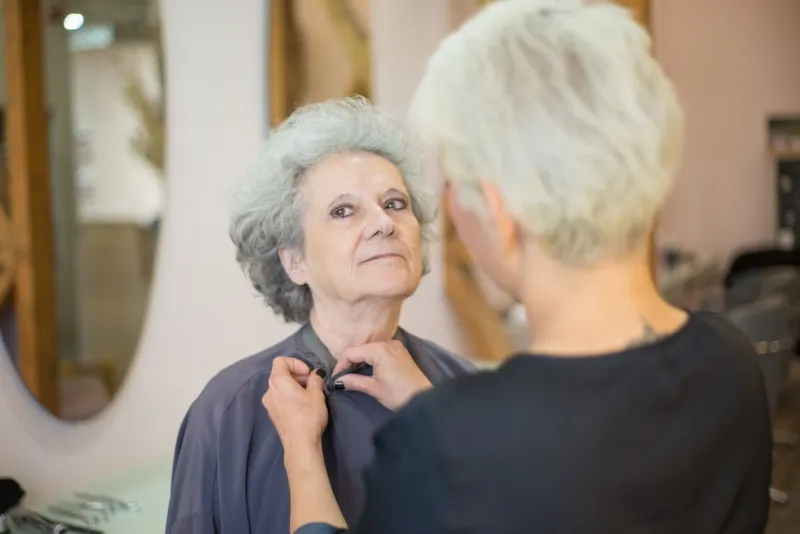
The transformation does not begin when scissors meet hair. It begins in the consultation—that quiet, deliberate conversation between client and stylist about not just what you want your hair to do, but what you need your life to do next.
At Salon Monty, we treat this exchange as the foundation of everything that follows. A great stylist is not simply a technician executing a predetermined shape. They are a collaborator helping you identify the version of yourself you are trying to show up as—and then engineering the specific cut, texture, and finish that makes that version feel inevitable.
This is why the experience of leaving a salon after a genuinely good appointment is so distinctive. It is not merely satisfaction with a service rendered. It is the particular, slightly electric feeling of alignment—of looking in the mirror and recognizing not who you were last week, but who you intend to be going forward.
An Investment That Works While You Do
Wardrobe investments depreciate the moment they leave the store. They go out of season, they wear, they require maintenance of their own. A well-executed haircut, by contrast, continues to work on your behalf every single day until your next appointment. It is present in every Zoom frame, every elevator introduction, every glance across a restaurant.
The return on that investment—measured in confidence, in presence, in the subconscious impressions you leave in rooms you may never fully know you influenced—is, by almost any calculation, exceptional.
At Salon Monty, we believe that where every detail defines you, nothing defines you more consistently than the one detail you carry everywhere. Dress thoughtfully, always. But begin at the crown.