When Your Curls Change the Rules: Adapting Your Hair Care to a Texture That Won't Stand Still
There is a particular kind of frustration that comes not from a bad hair day, but from a string of them—days when the products that once delivered definition now deliver frizz, when the technique that used to work beautifully now produces something unrecognizable. For many people, the instinct is to blame the product, the humidity, or even the stylist. Rarely does the consideration arise that the hair itself may have changed.
And yet, it does change. Quietly, gradually, and often without announcement, your natural texture evolves throughout your lifetime. Understanding that evolution—and responding to it with intention—is one of the most sophisticated things you can do for your hair health and overall presentation.
The Biology Behind the Shift
Hair texture is determined primarily by the shape of the follicle from which it grows. A round follicle produces straight strands; an oval or asymmetrical follicle produces waves, curls, or coils. While the follicle's fundamental architecture is largely genetic, its behavior is subject to considerable influence from hormonal fluctuations, nutritional status, medications, stress levels, and environmental exposure.
Puberty, pregnancy, postpartum recovery, perimenopause, and menopause each represent significant hormonal transitions that can measurably alter the follicle's output. Androgens, estrogens, and thyroid hormones all play documented roles in hair growth cycles and strand diameter. A woman who wore loose waves through her twenties may find herself managing tighter, more defined curls in her late thirties—or, conversely, discover that curls she once relied upon have loosened considerably.
Beyond hormones, prolonged sun exposure can degrade the protein bonds within the hair shaft, causing previously resilient curls to lose elasticity. Hard water, common across much of the American Midwest and Southwest, deposits minerals onto the strand over time, weighing down fine textures and altering how products are absorbed. Even a change in diet—specifically, a reduction in essential fatty acids or iron—can shift the moisture balance and structural integrity of your hair.
Recognizing the Signs Before They Become Problems
Texture change rarely announces itself dramatically. More often, it presents as a slow accumulation of small inconveniences: a diffuser routine that now takes twice as long, a curl pattern that seems inconsistent from section to section, or a persistent dryness that no amount of deep conditioning appears to resolve.
The key is learning to observe rather than simply react. When your hair behaves differently on a consistent basis—not just occasionally—that is meaningful information. Pay attention to changes in porosity, which determines how readily your hair absorbs and retains moisture. Hair that once responded well to lightweight leave-ins but now requires heavier creams is signaling a shift in its moisture needs. Hair that used to hold a style through the next morning but now collapses by midday may be experiencing a change in elasticity.
A strand test, which your stylist can perform during a consultation, offers concrete data: healthy hair stretches slightly before returning to its original length; hair that snaps immediately is brittle, while hair that stretches excessively without returning has lost structural integrity. These observations provide a foundation for rebuilding your routine with precision rather than guesswork.
Recalibrating Your Product Approach
Once you have identified that a texture shift is underway, the most common mistake is attempting to restore the old routine rather than designing a new one. Products formulated for your previous texture may no longer serve your current hair—and continuing to use them can compound the problem.
For hair that has become drier or coarser over time, the priority is moisture retention rather than simply moisture application. This means layering hydrating products—a water-based leave-in followed by a sealant such as a natural oil or butter—to create a barrier that slows moisture loss throughout the day. Protein treatments, while useful for rebuilding strand strength, should be introduced carefully; hair that has become more porous often benefits from protein, but overuse can lead to stiffness and breakage.
For hair that has loosened or lost definition, lightweight formulas with hold—curl creams, gels with flexible hold, or mousse applied to soaking-wet hair—tend to perform better than heavy creams that can pull waves down before they have a chance to form. Plopping, the technique of wrapping wet hair in a cotton T-shirt or microfiber towel to encourage curl formation, may become more or less effective depending on your current texture and should be reassessed rather than assumed.
Diffuser settings, too, deserve reconsideration. Lower heat with higher airflow tends to be gentler on texture that has become more fragile, while hair that has grown denser may require a longer drying time to avoid residual moisture that causes frizz after styling.
The Role of Professional Assessment
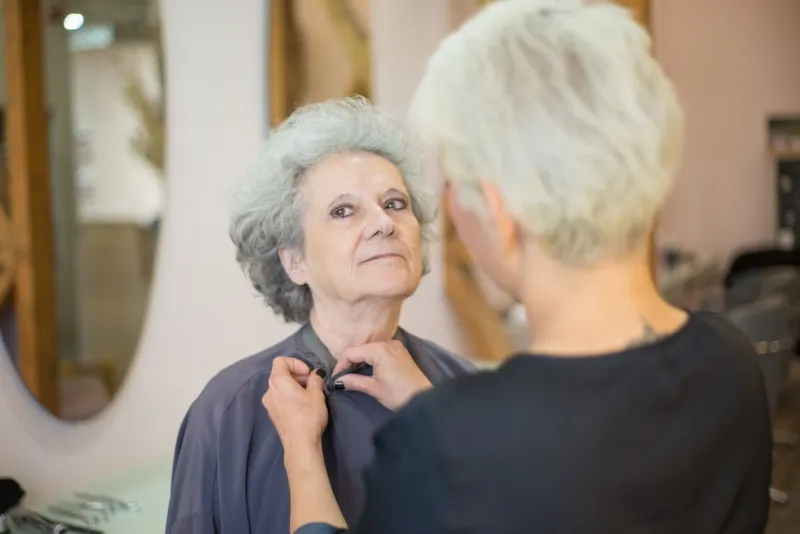
Self-observation has its limits. A skilled stylist brings both technical knowledge and an objective perspective that is difficult to replicate at home. During a thorough consultation, a professional can assess not only your current texture but also the condition of your scalp—which, as the foundation of hair health, plays a significant role in how your strands behave.
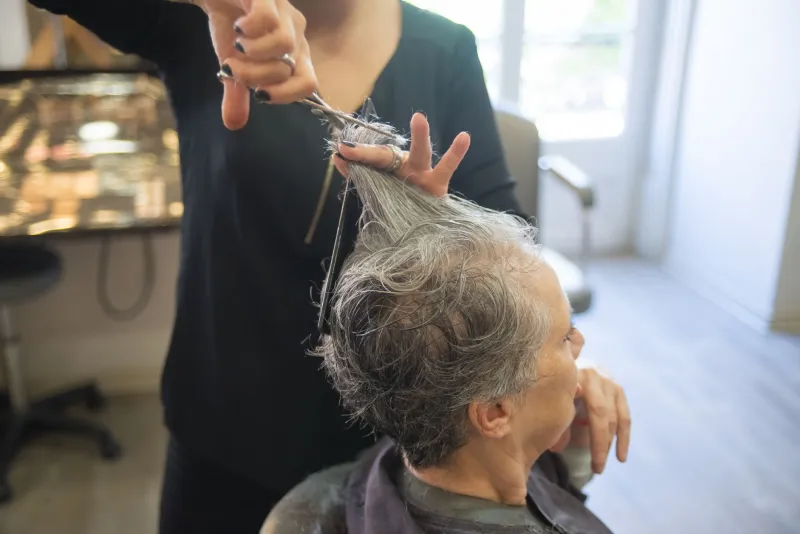
At Salon Monty, the philosophy is that every detail carries meaning, and that extends to the nuanced conversation that precedes any service. Describing not just what you want your hair to look like, but how it has been behaving recently, gives your stylist the context needed to recommend adjustments—whether to your cut, your color approach, or the products you use at home. A haircut designed for a looser curl pattern, for instance, may not distribute weight correctly as curls tighten; a slight reformulation of the layering or graduation can restore balance.
Color chemistry is another area where texture shifts matter. As hair becomes more porous, it absorbs color differently—sometimes more intensely, sometimes unevenly. A colorist who understands your current texture can adjust formulation timing and application technique to compensate, ensuring that results are consistent rather than unpredictable.
Building a Routine That Grows With You
The most enduring hair care philosophy is one built on flexibility rather than rigidity. Rather than committing to a fixed routine indefinitely, approach your hair care as a living practice—one that is revisited seasonally, adjusted after significant life transitions, and refined through ongoing observation.
Keep a brief record of what you use and how your hair responds. Note changes in climate, in your diet, in your stress levels, and in any medications you begin or discontinue. These variables, cross-referenced with your hair's behavior, often reveal patterns that make future adjustments far more intuitive.
Your curls, waves, and texture are not problems to be solved—they are characteristics to be understood. When that understanding evolves alongside your hair, the result is not just a better routine. It is hair that genuinely reflects who you are at this particular moment in time, cared for with the precision and attention that every detail deserves.